Have a seat, let's talk about this awesome project.
— Let’s look at Ship 'Em
Where did the original idea for this app come from?
The idea came from a really simple, everyday instinct. You see two people who look like they have chemistry and you think, they should at least go on a date.

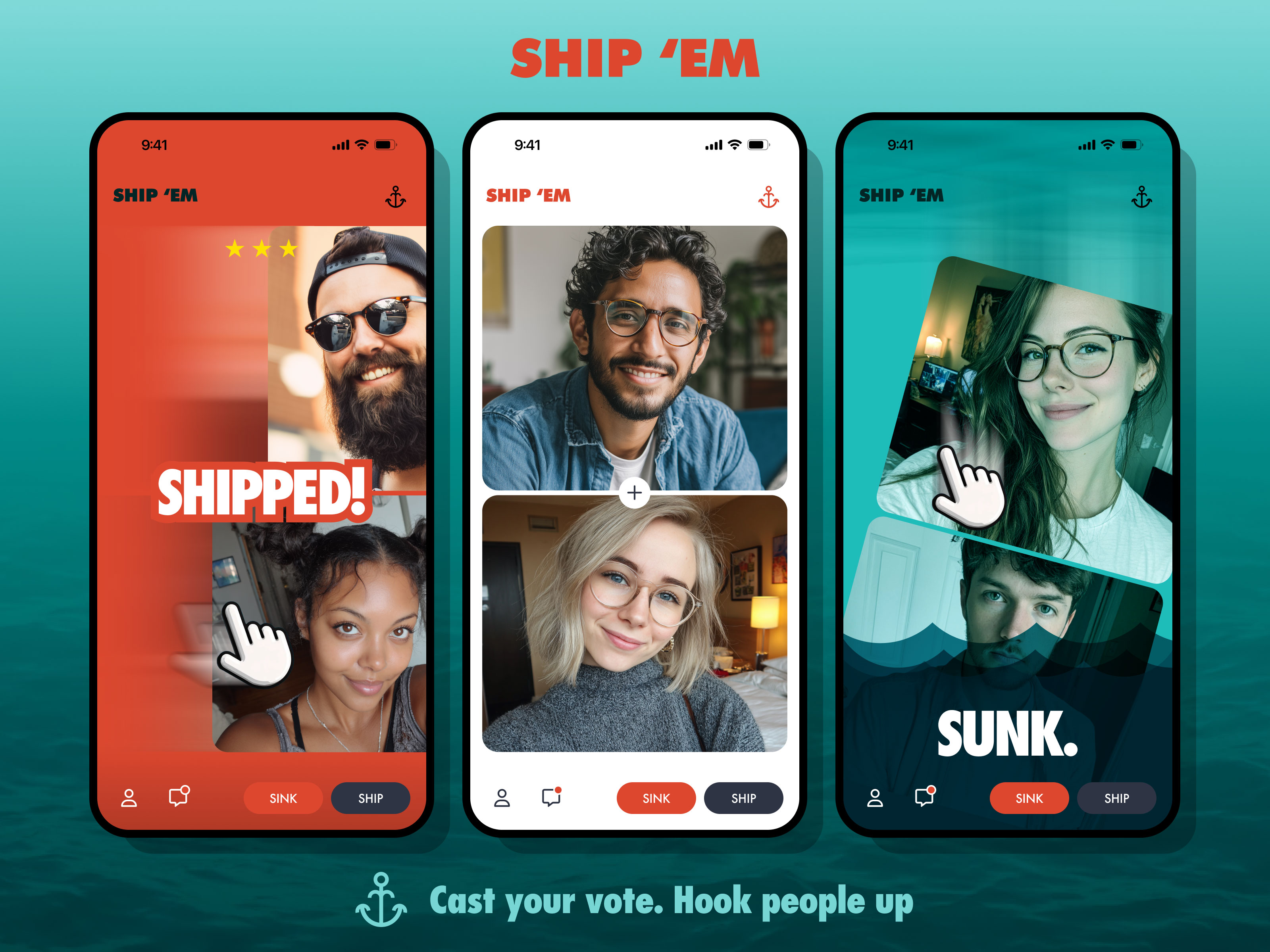
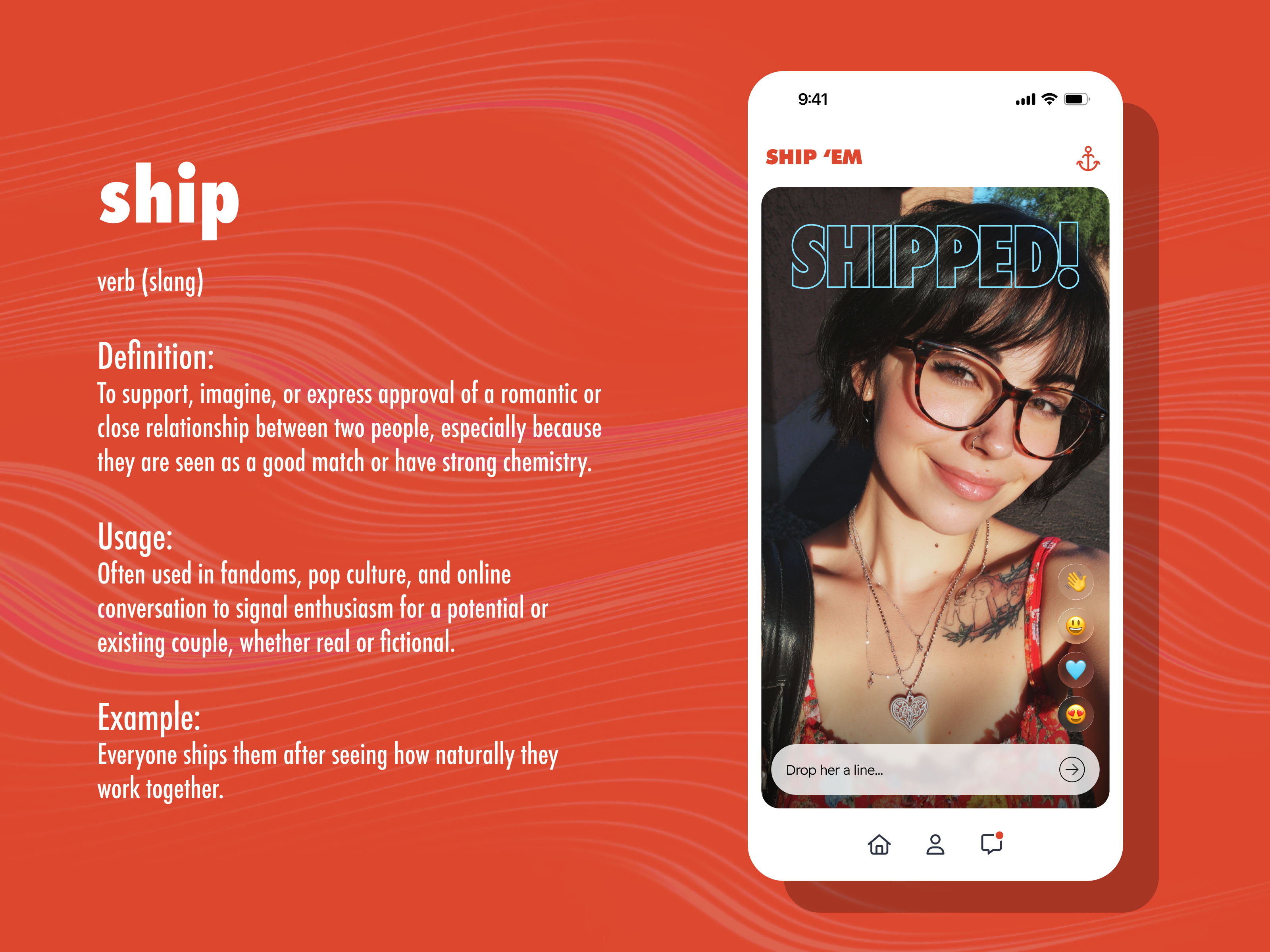
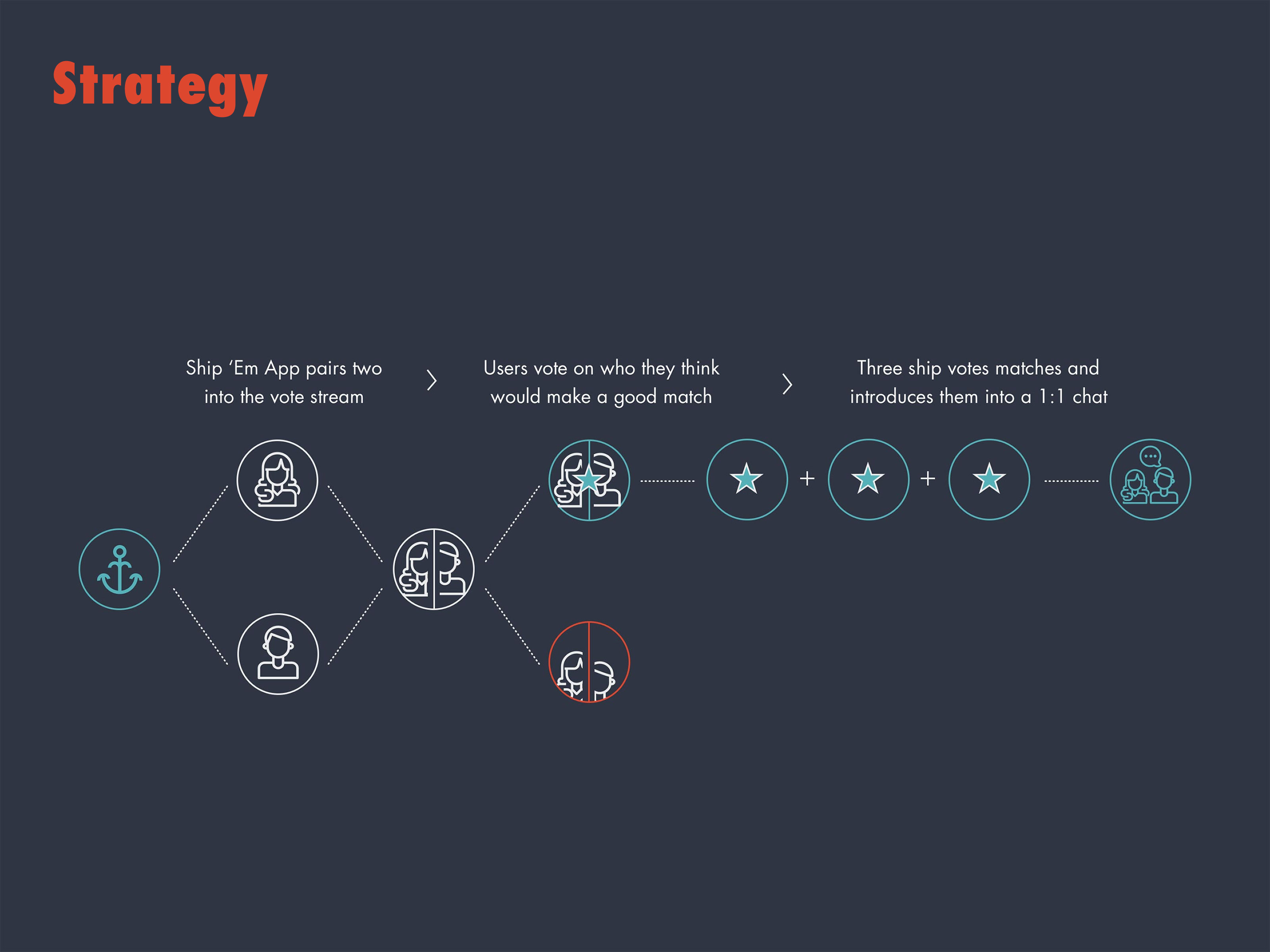
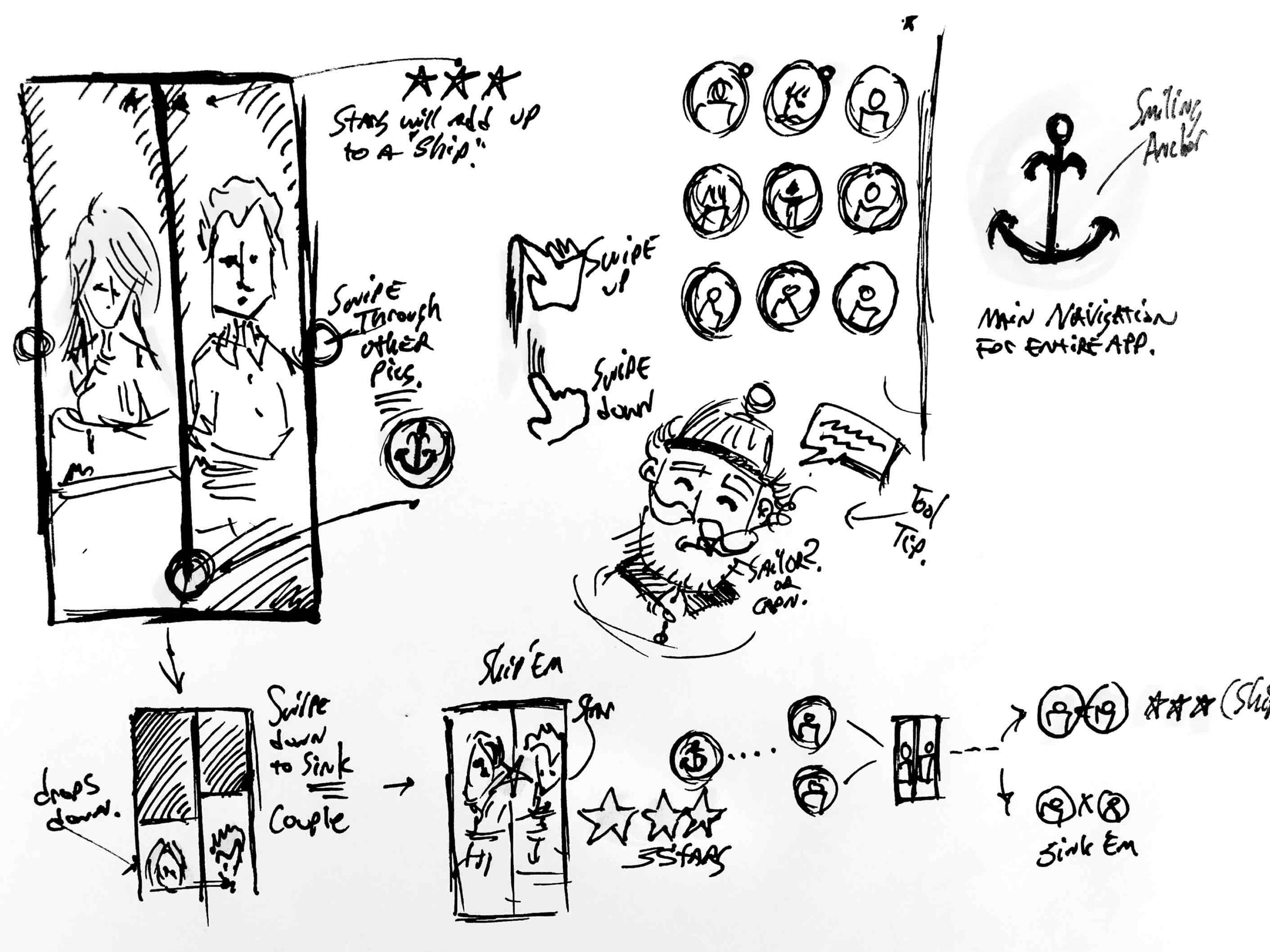
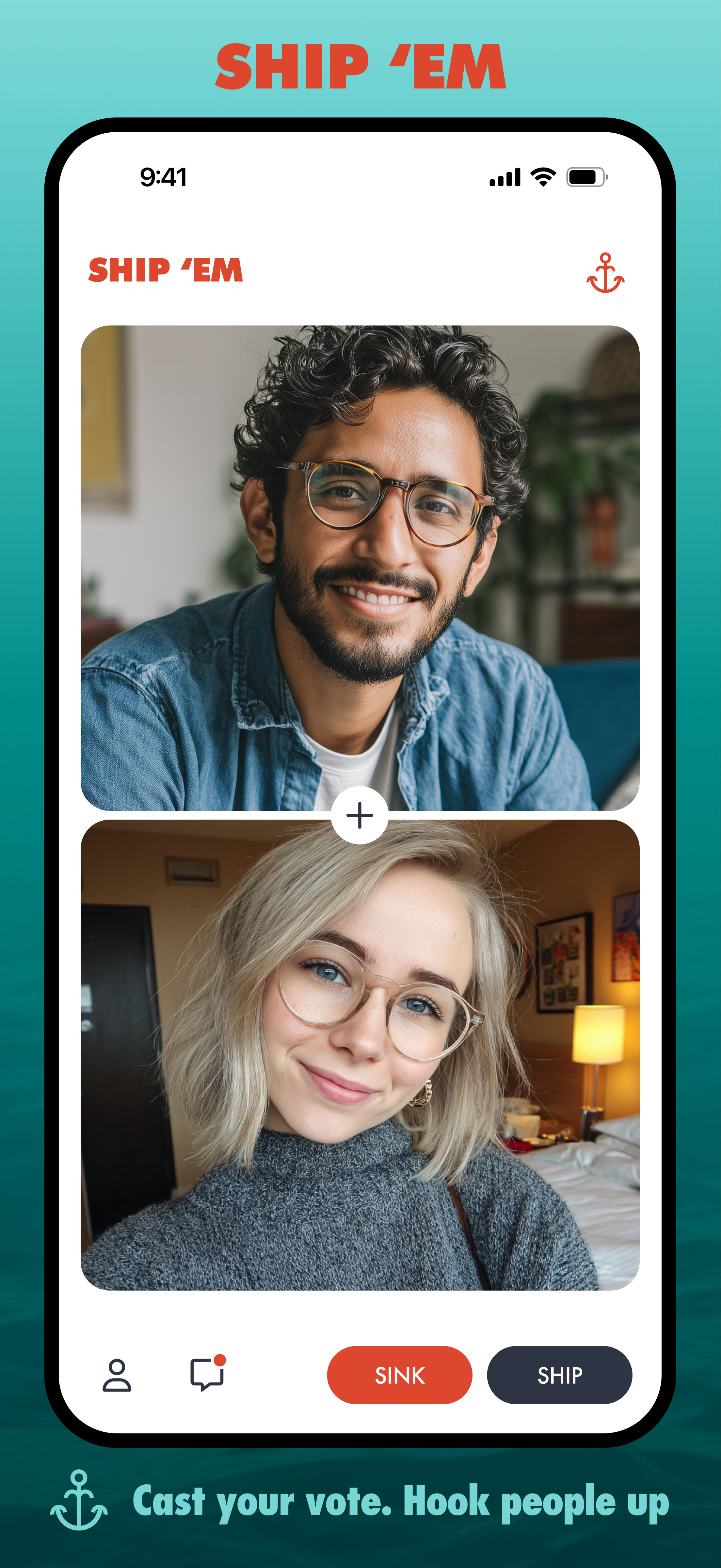
That moment happens all the time, but there was no outlet for it. Ship ’Em turns that instinct into a game. Users see paired people and vote on whether they should “ship” them, short for relationship. It is based on visual chemistry and first impressions, the same way people naturally think in real life.

What made it work was removing the awkwardness. People can be shipped without directly participating, though participation is encouraged. The decision comes from the group, not the individuals, which makes it feel lighter, less pressured, and more fun. It ends up feeling more social and less uncomfortable than traditional dating apps because the shipping is done by third parties, not by the people being matched.
What makes this different than all the other dating apps.
Most dating apps put all the pressure on the individual. You swipe, you judge, you match, and it can feel awkward or exhausting pretty fast.

This flips that dynamic. Matching comes from the group, not just one person. Third parties do the shipping, which makes it feel lighter, more social, and way less uncomfortable. Instead of asking “do I like them,” it becomes “do they have chemistry,” which is a much more natural instinct and a lot more fun.
What was hardest about taking this from an idea to something people could actually use?
The hardest part was building the right team to make it real. As a freelancer, I had the idea and the vision, but turning it into a working product meant finding engineers who understood both the technical side and the tone of the app.

I had to source people, align them quickly, and keep momentum without the structure of a company behind it. Balancing budget, timelines, and trust while still moving fast was the real challenge. Getting the right people in place mattered just as much as the idea itself.
What’s hardest about developing an idea on your own before anyone else is involved?
The hardest part is making decisions without feedback. You have to trust your instincts long enough to build something real, even when no one is there to validate it yet.

Working alone forces you to be honest about what matters and what does not. It can be isolating, but it also sharpens your judgment because every choice is yours to own.