You didn’t mean to interview me, but since you’re here...
— Let’s explore The Princeton Review
How did your role evolve during your five years at The Princeton Review?
I started at Tutor.com working directly with the CEO, Mandy Ginsberg of Match Group, on brand positioning and growth. The goal was to make Tutor.com a household name in online tutoring. A key part of that strategy was acquiring The Princeton Review, which already had strong brand recognition but needed to be refreshed and brought back into focus.

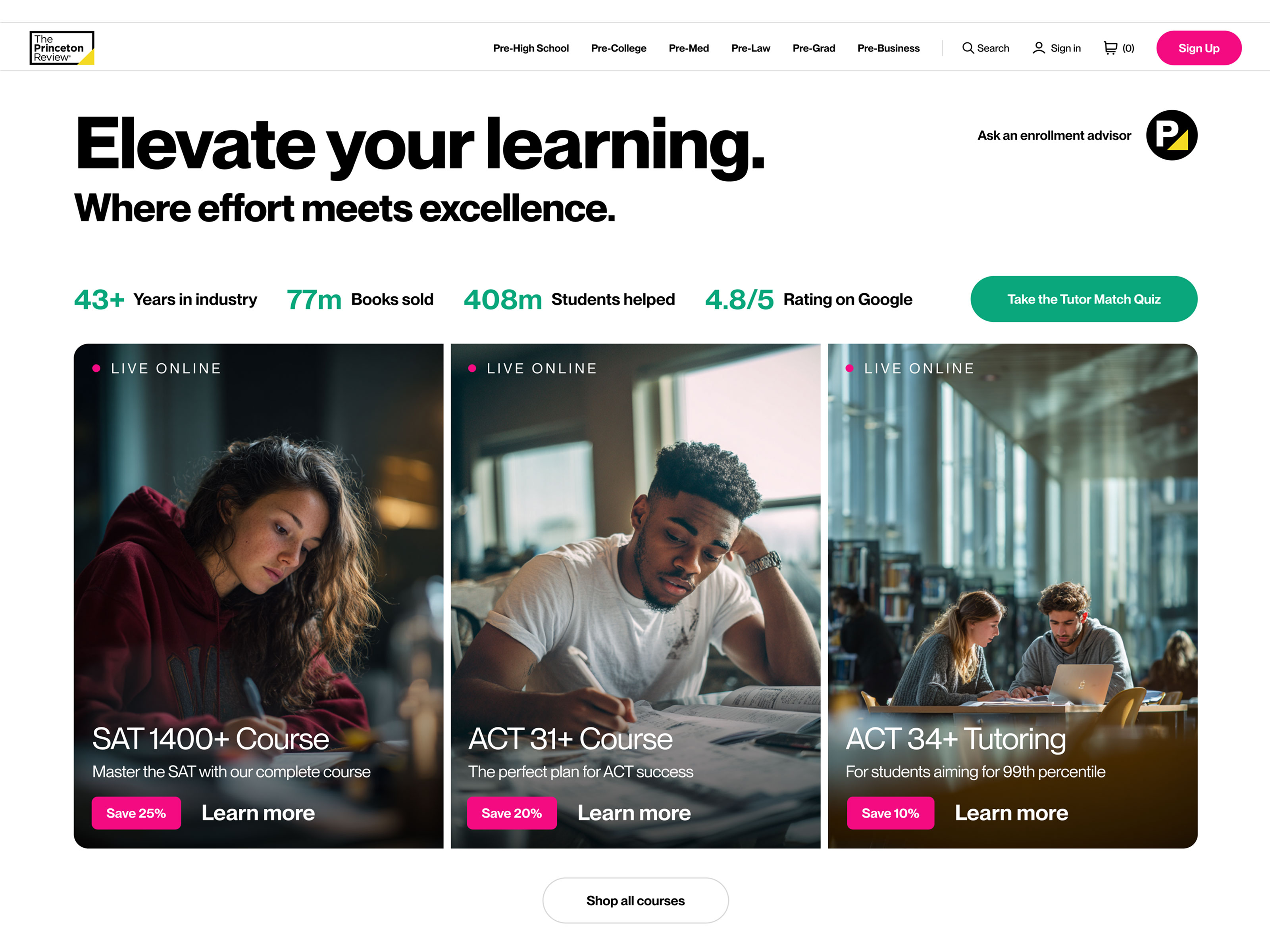
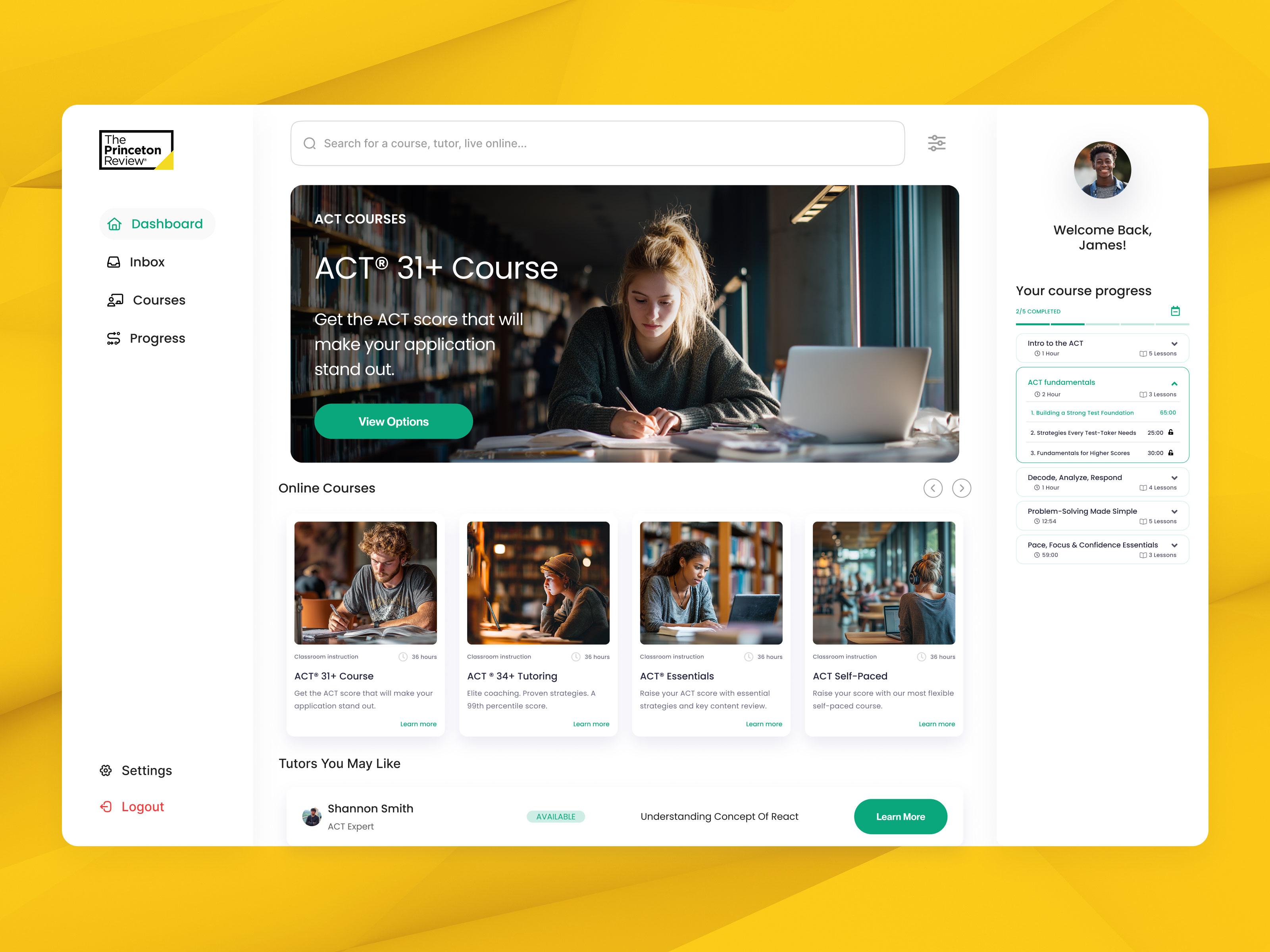
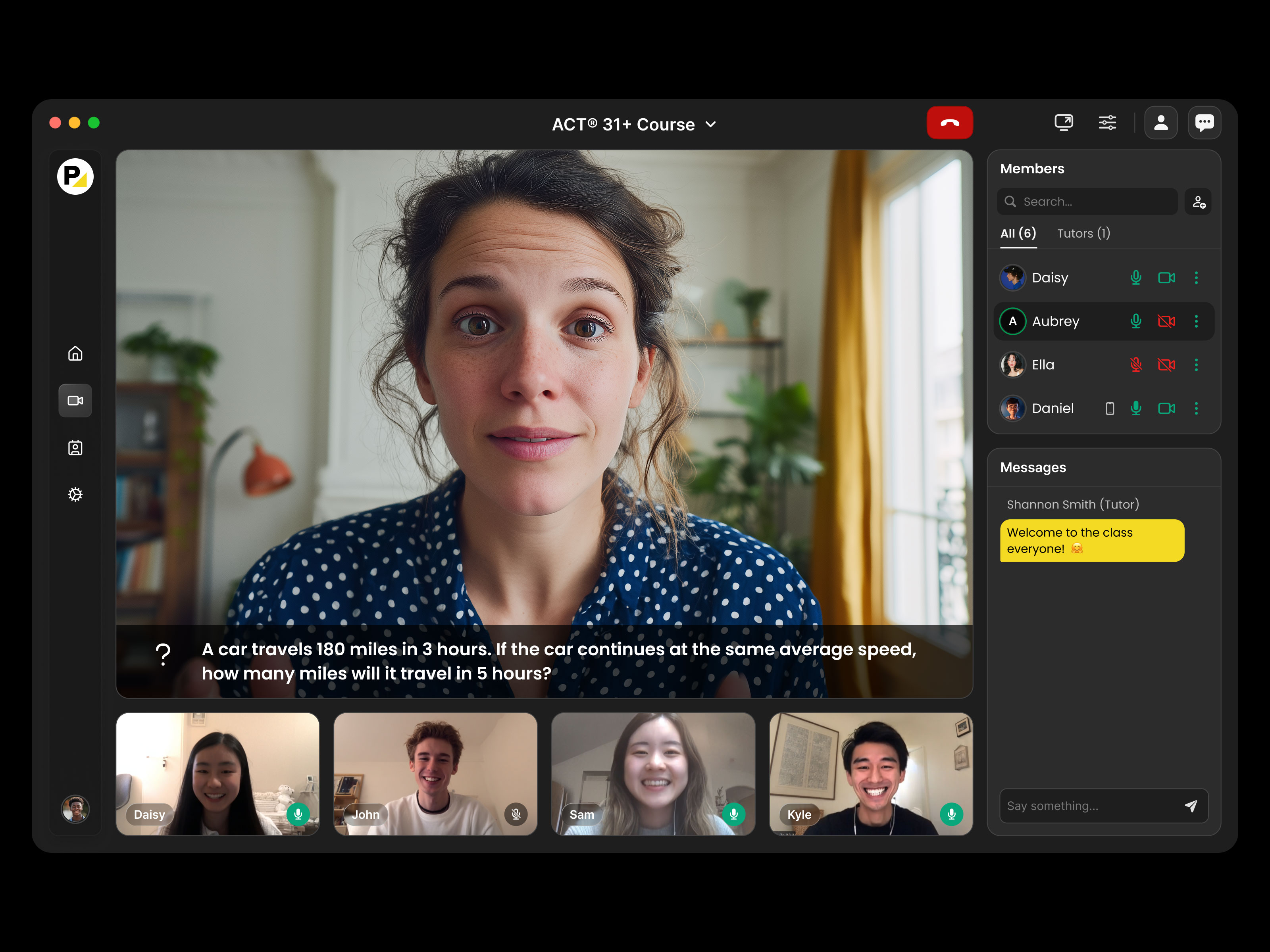
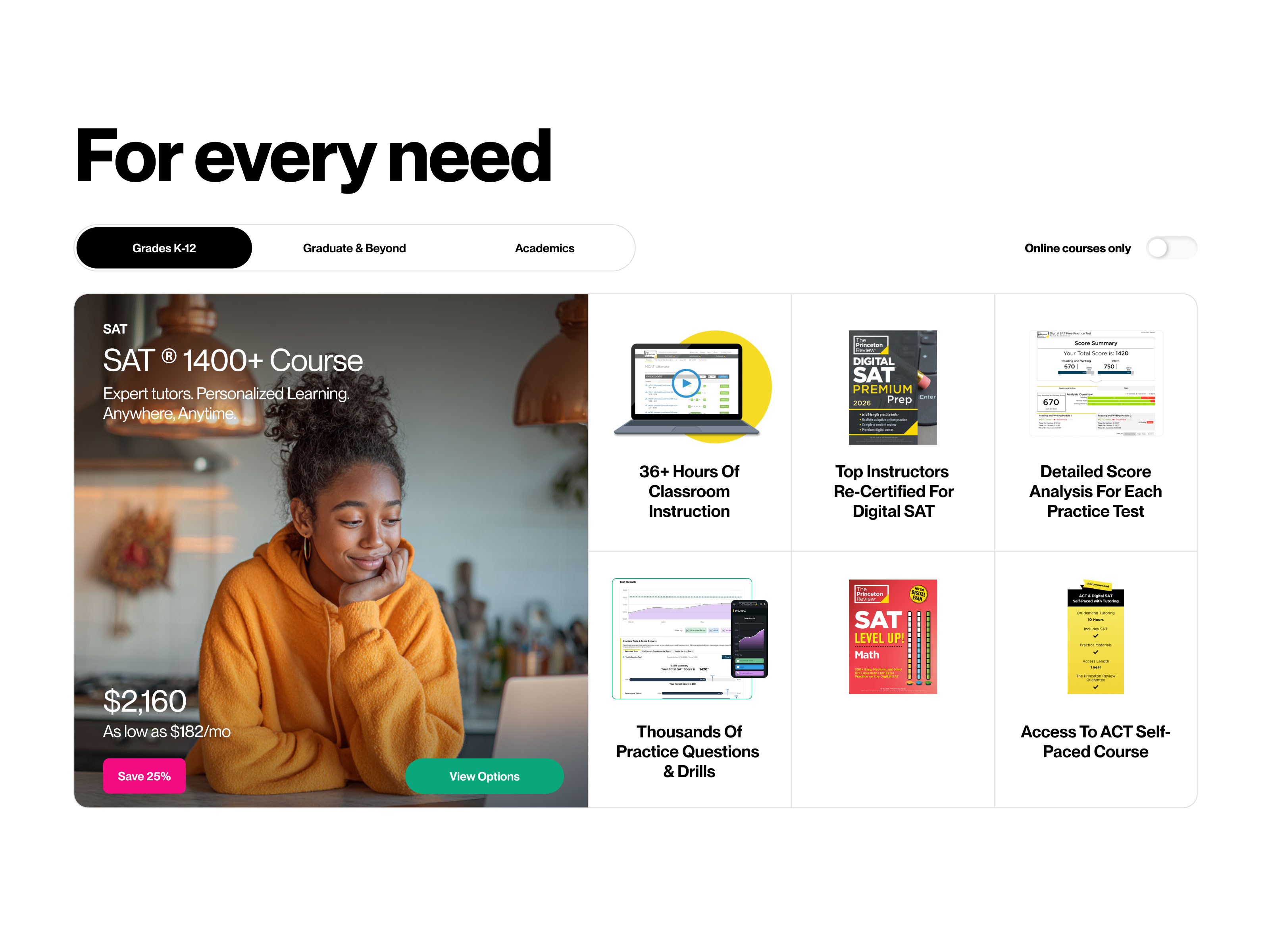
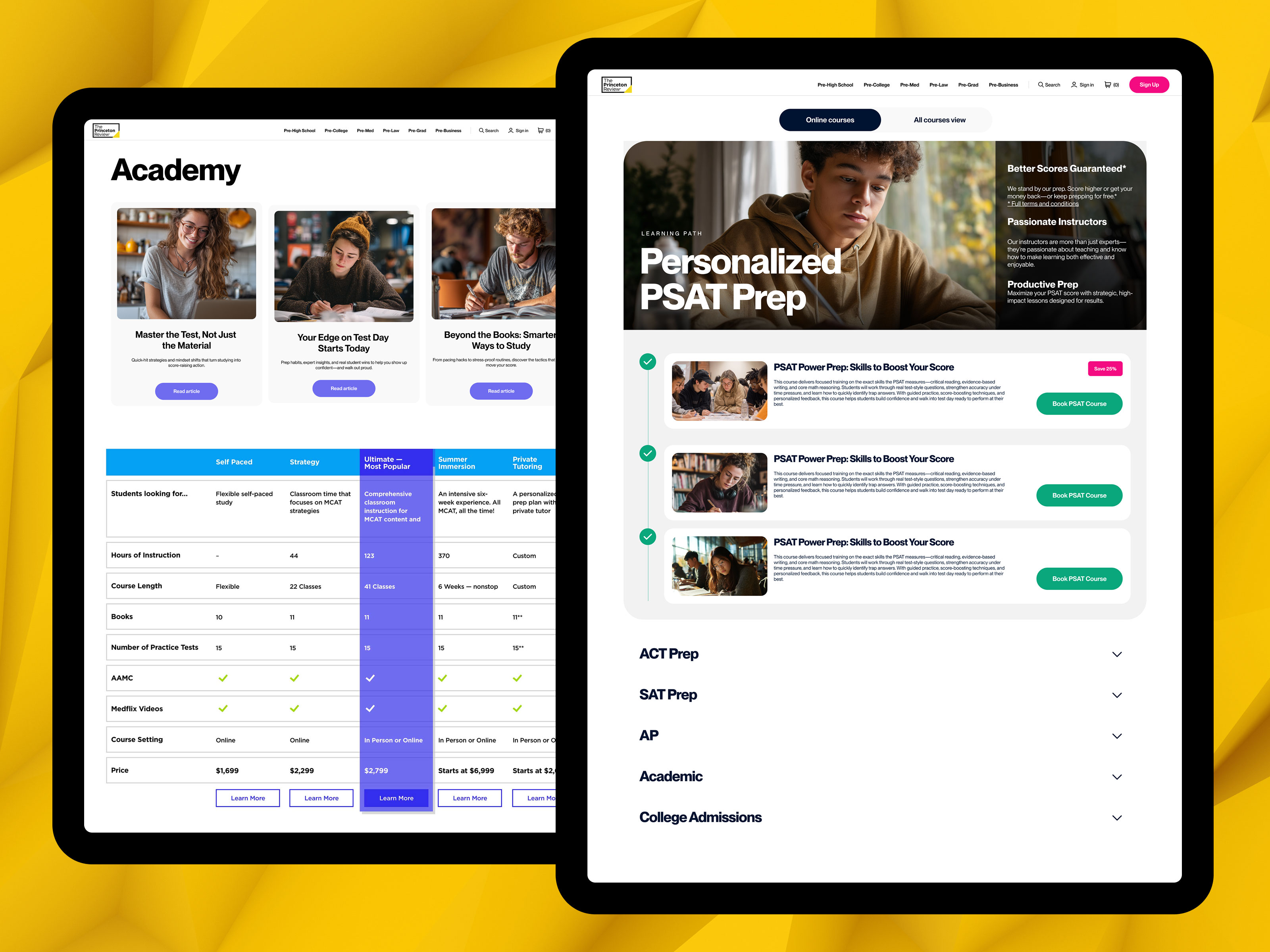
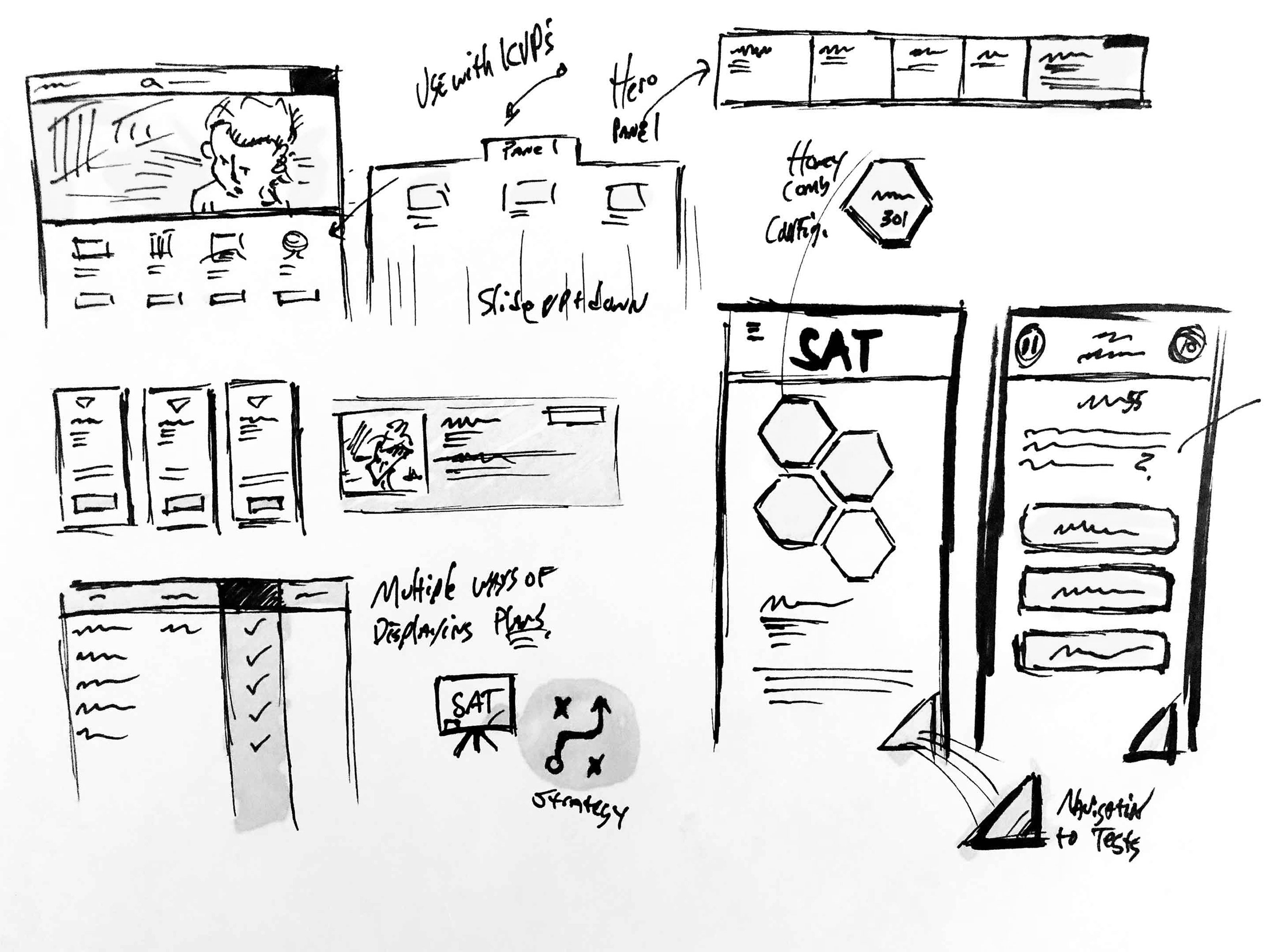
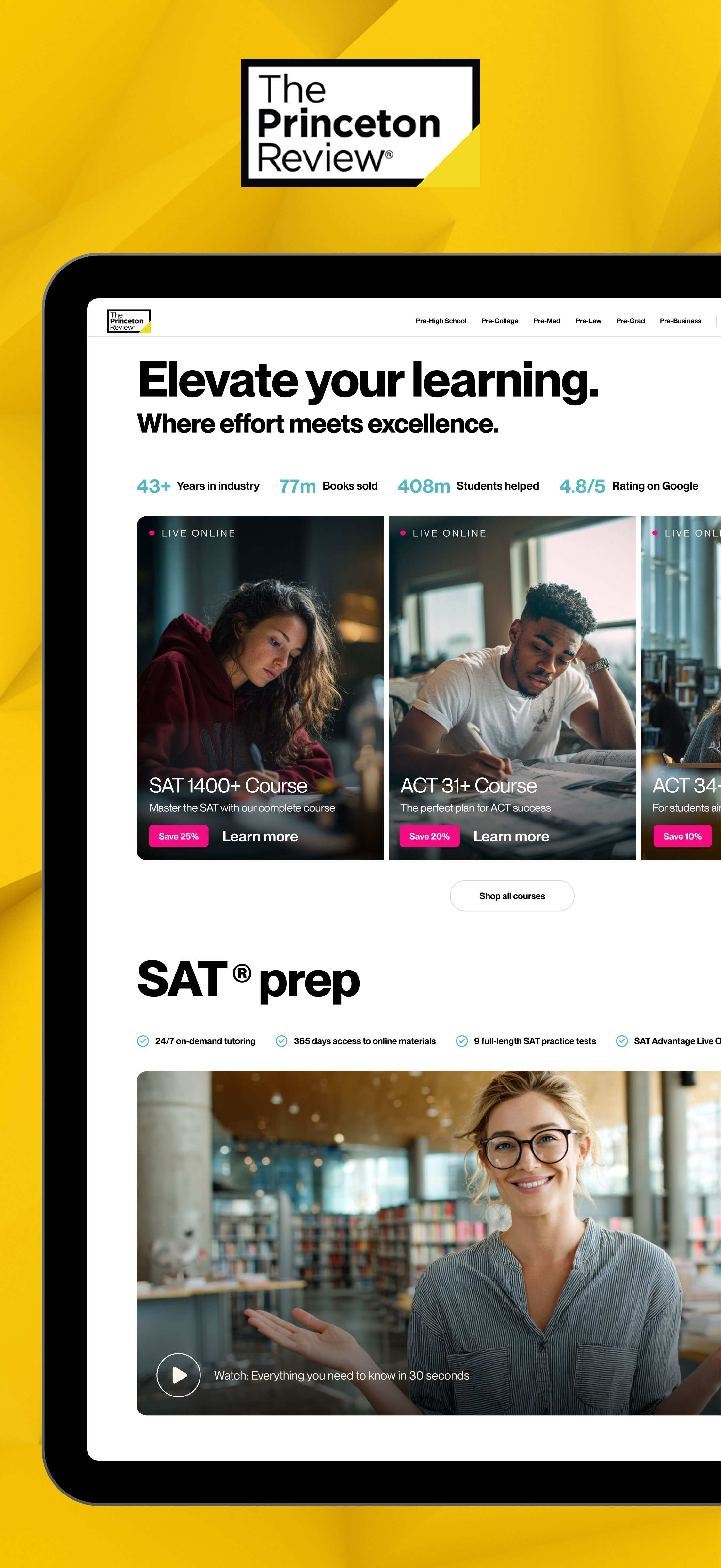
As the integration took shape, my role expanded quickly. What began as brand work grew into creative leadership across digital products, marketing, and user experience. I became deeply involved in UX, conversion, and product strategy for the ecommerce platform, the live tutoring experience, and content-heavy learning tools.

Over time, I shifted from owning individual deliverables to building systems and teams. I stayed hands-on where the impact mattered most while mentoring designers and shaping how the team worked.

I led several small, focused teams across brand, UX, and marketing rather than one large centralized group. The pace was fast and the surface area was wide, so being in the work was part of the job. My style was very player-coach. I was designing, reviewing, and shaping key flows every day while helping designers level up. I handled the early thinking and problem framing, then partnered closely with the team to execute and refine.
What types of teams did you lead and how hands-on were you day to day?
I led several small, focused teams across brand, UX, and marketing rather than one large centralized group. The pace was fast and the scope was wide, so being hands-on was part of the job.

My style was very player-coach. I was in the work every day, designing, reviewing, and shaping key flows while mentoring designers and helping them level up. I handled much of the early thinking and problem framing, then worked closely with the team to execute and refine.
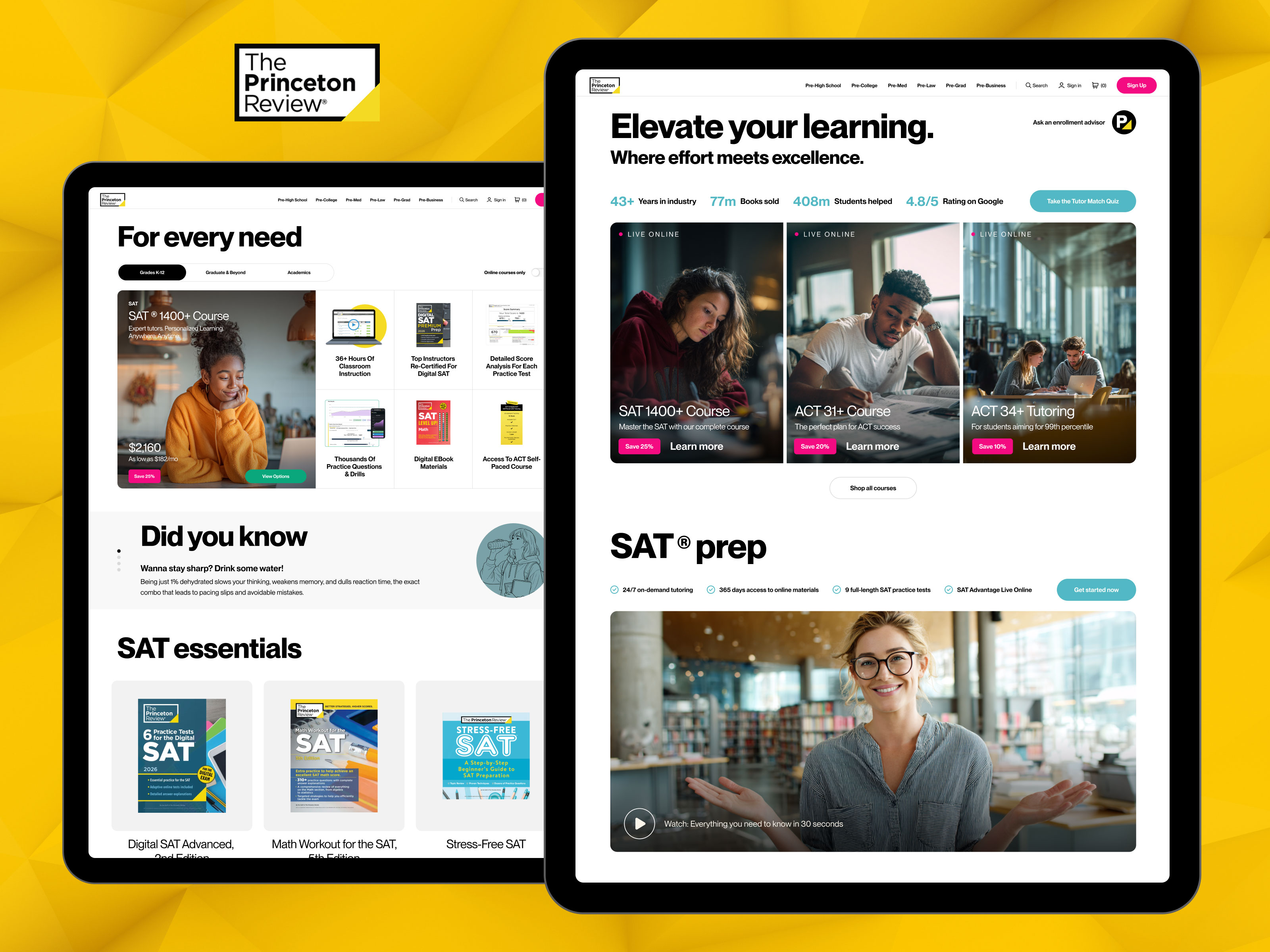
What were you responsible for beyond visual design?
Visual design was only one part of the job. I owned the experience end to end, from first touch through conversion and ongoing use. That included UX strategy, product flows, conversion optimization, and how content was structured across platforms.

I worked closely with product and engineering to shape features early, not just apply polish at the end, and I focused on simplifying complex experiences so they were easier to understand and use.
How did your work impact enrollment, engagement, or revenue?
I focused on simplifying how tutoring options were presented, which reduced friction and increased conversions on key enrollment paths. Through a series of small changes, we saw lifts in the five to six percent range, along with lower abandonment on higher-commitment tutoring packages.

Improvements to onboarding also helped students get started faster and stay engaged, which supported retention and reduced early support issues.
How did you balance brand consistency with the needs of different products and audiences?
Parents needed clarity and reassurance. Students needed speed and focus. Tutors needed workflows that were efficient and easy to manage. Institutions needed credibility, consistency, and confidence that the platform could scale.

I kept the foundation consistent across all of it, then adjusted how it showed up based on who was using it and what they were trying to do. That way each experience felt right for the moment without feeling like a different company.
Why was this the right time to move on after five years?
Toward the end of my time there, The Princeton Review was acquired by ST Unitas, a Korean education technology company. That brought major changes in leadership and structure.

It also lined up with where I was personally. I had helped integrate the brand, strengthen the design voice, and put scalable systems in place. I felt I had done what I came to do and was ready for a new challenge rather than another transition.

I left feeling like I had made a real impact and left things in a strong place.