If this reads like an interview, that’s because we’re basically in one.
— Let’s dive into VideoShops
What problem was VideoShops trying to solve?
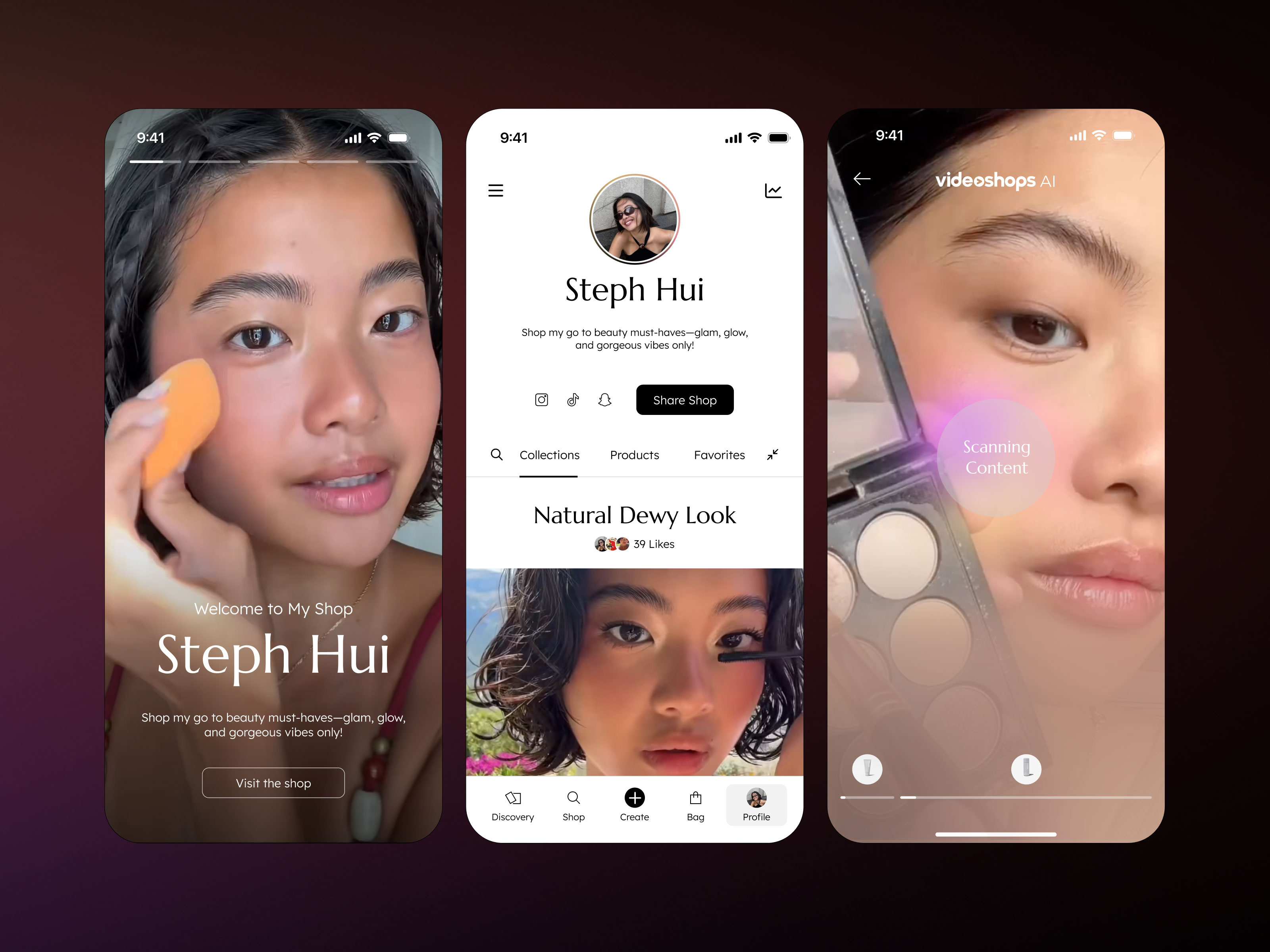
The affiliate link model is broken. Creators send traffic out to third-party sites, lose control of the experience, wait weeks or months to get paid, and have very little visibility into what actually converts.

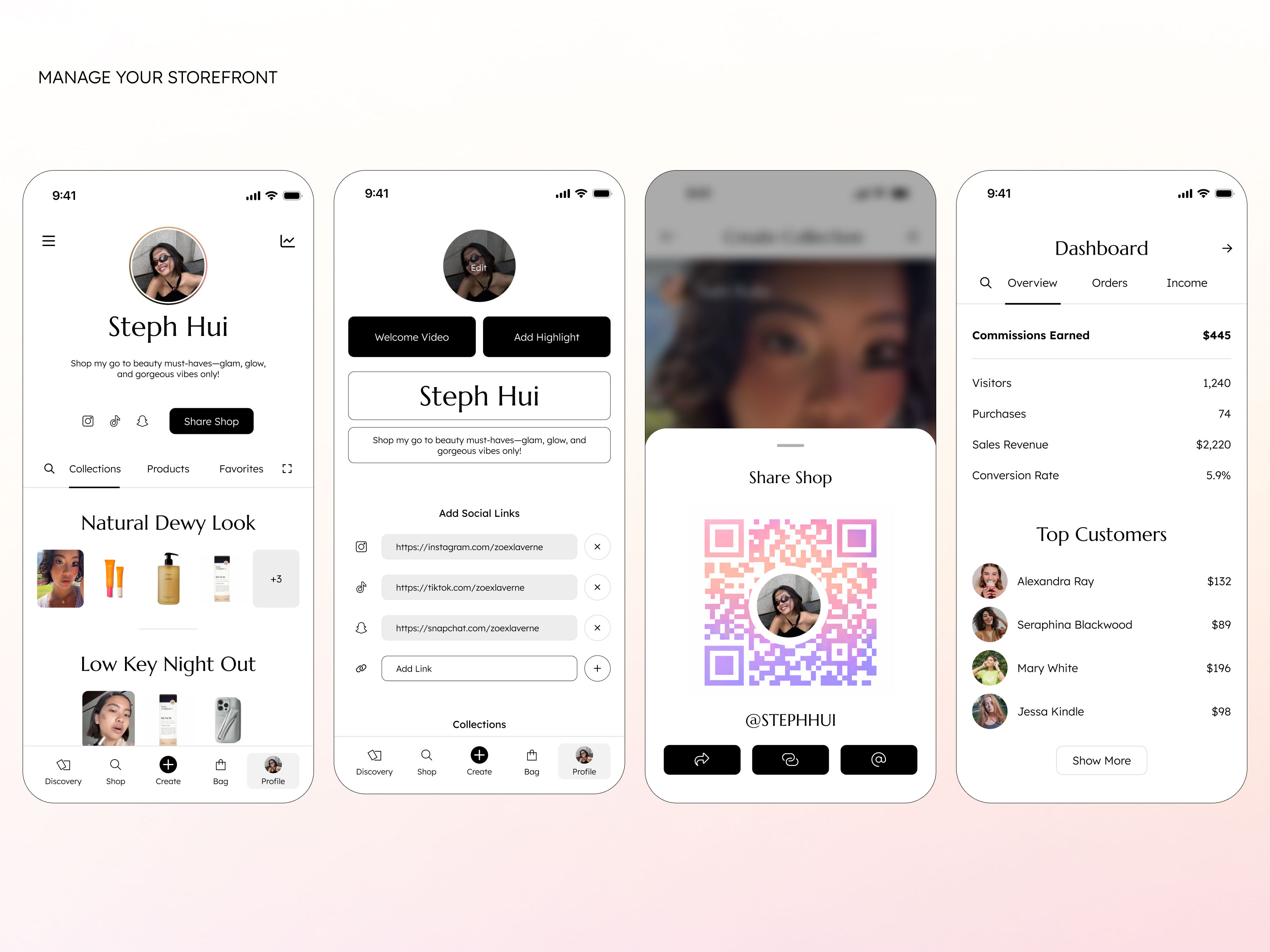
VideoShops was built to replace that with something direct. Same-day payouts, the ability to sell multiple products in one place, and a proprietary Universal Merchant Engine that handles the transaction layer without gatekeeping. Creators do not need approval, special access, or a complex setup to start selling.

The goal was to give creators ownership over their storefront, their audience, and their revenue, all in one system that works where their content already lives.
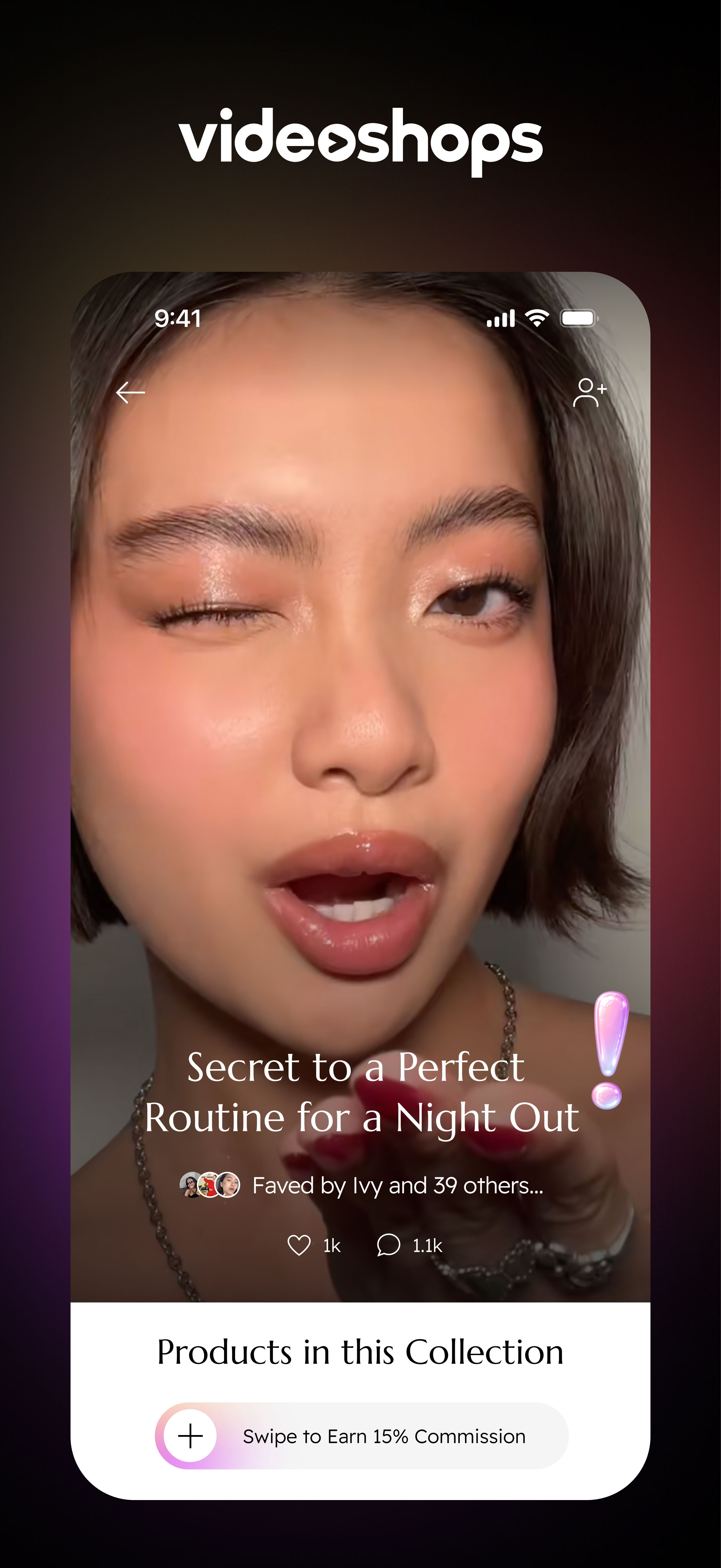
How did you design for both creators and buyers without compromising either experience?
I treated them as two distinct users with different needs. Creators needed speed, control, and clarity around payouts.

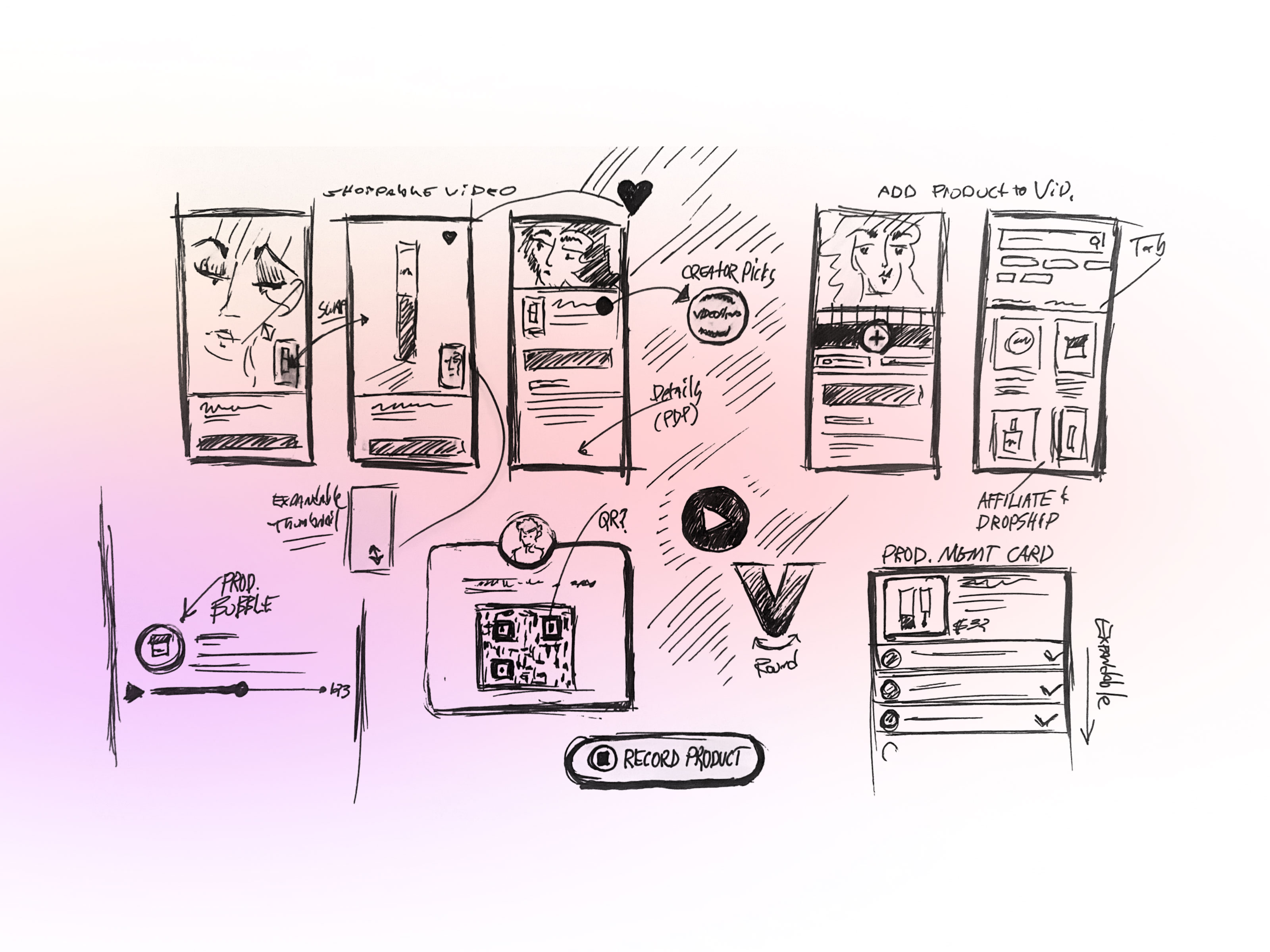
Buyers needed confidence, simplicity, and a smooth checkout.Instead of forcing one experience to do everything, I designed separate flows that shared a common visual language. That way both sides felt supported without the product feeling split or confusing.
What feedback did you hear early on and how did it shape the product?
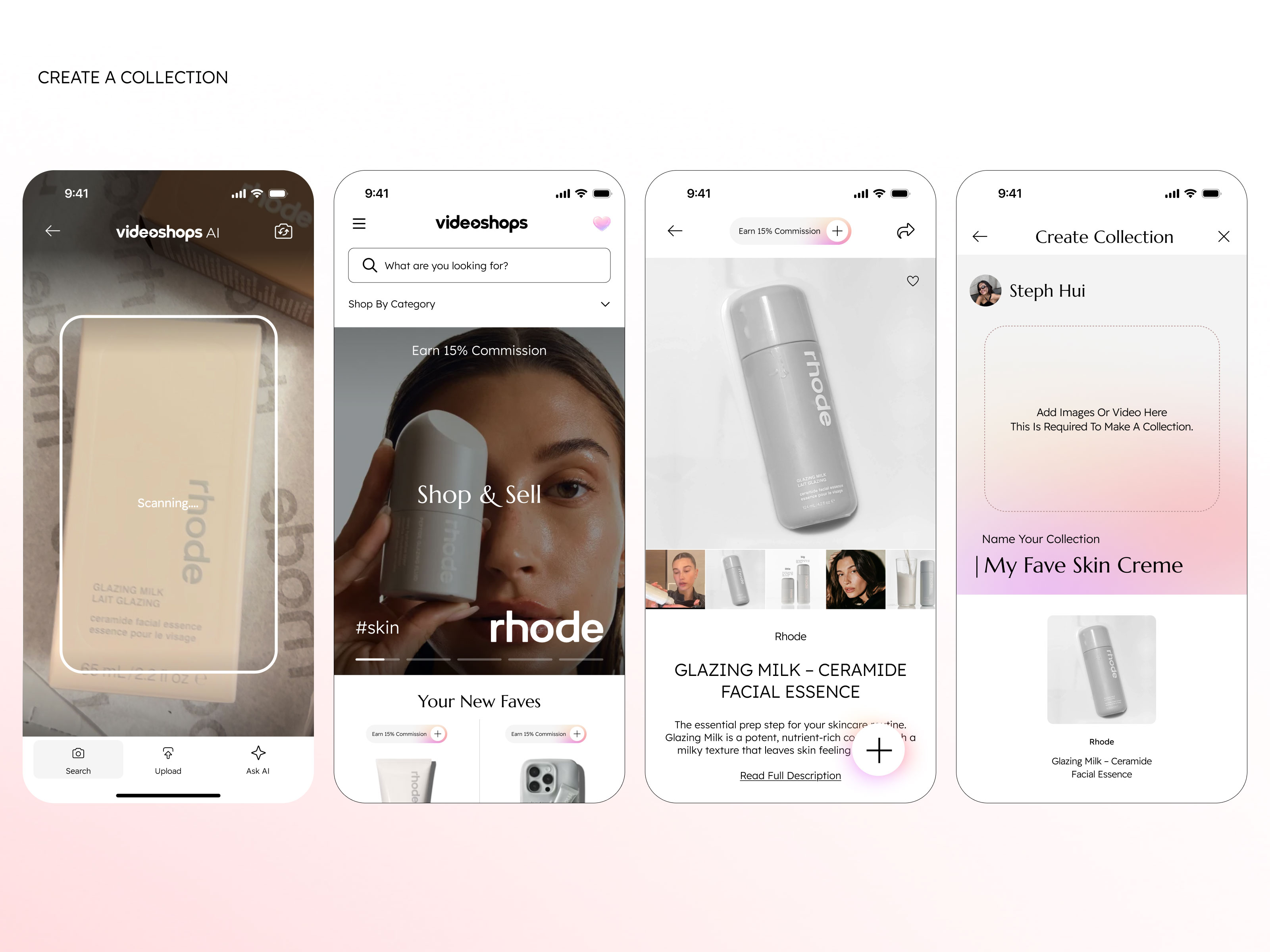
Early feedback showed that the collection creation flow was too open ended. Giving creators the freedom to complete steps in any order sounded flexible, but in practice it caused confusion and drop off.

I reworked the flow into a more linear process with clear, required steps to move forward. That structure made it easier to understand what needed to happen next, reduced uncertainty, and kept people moving instead of second guessing.

The result was lower drop off and a flow that was easier to track, test, and improve over time.
How did you design VideoShops to work across multiple platforms without breaking the buying experience?
We started on web because it was the fastest way to prove the concept and get real buying behavior in front of us.

Once there was clear demand, it made sense to move into iOS.

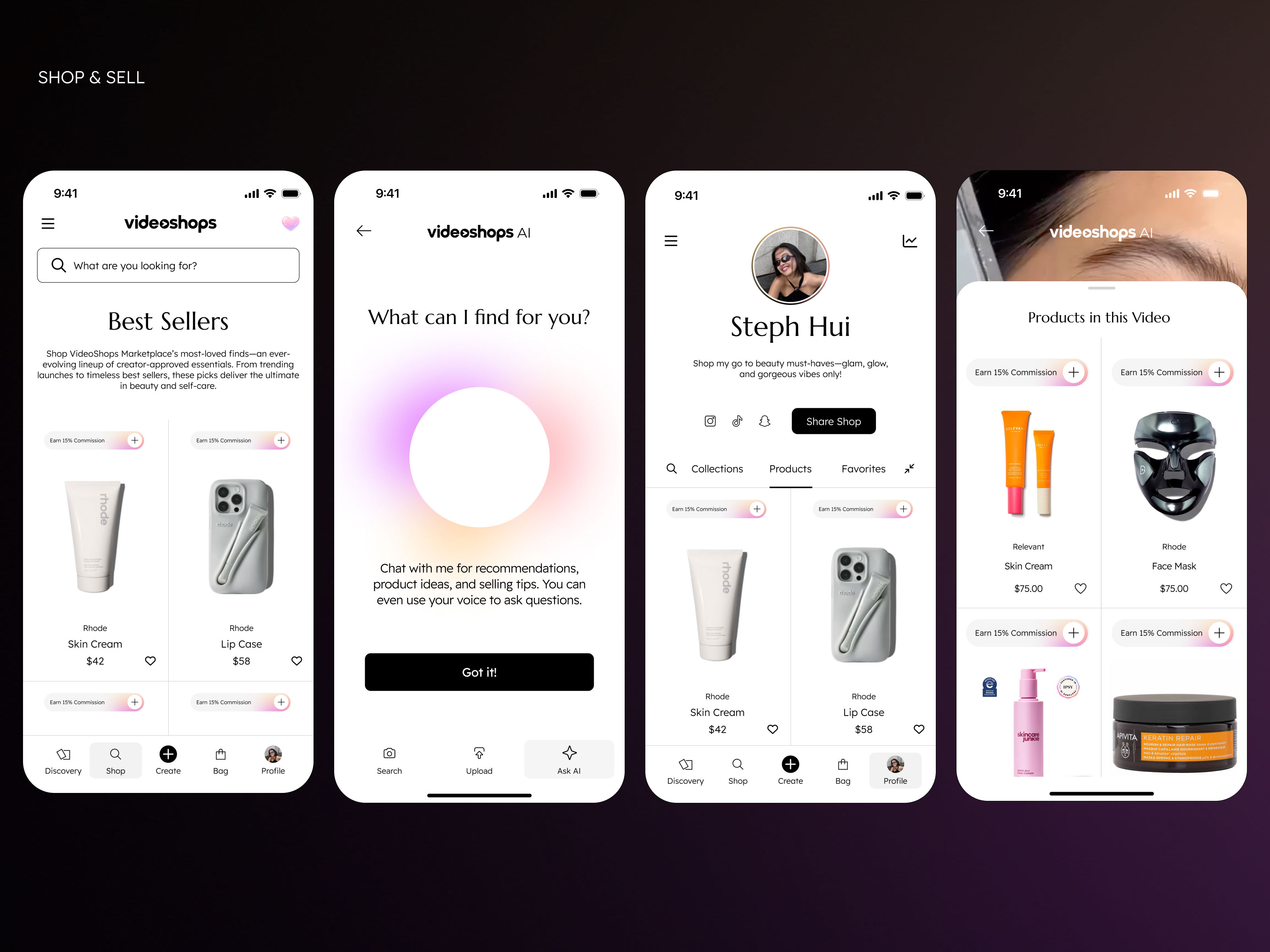
Keeping both platforms turned out to be important. iOS worked best for creators managing shops and browsing other creators, while web stayed ideal for buyers coming in through shared links and guest checkout.

Each platform served its user well without trying to be everything at once.
What decisions did you make to remove friction for first-time creators?
I focused on getting creators to their first live shop as quickly as possible. That meant cutting setup down to the essentials and removing anything that felt like permission, approval, or busywork.

I simplified onboarding, made the steps linear and obvious, and avoided asking for information that was not immediately required. The goal was that a first-time creator could start selling without needing instructions or support, just a clear path forward.